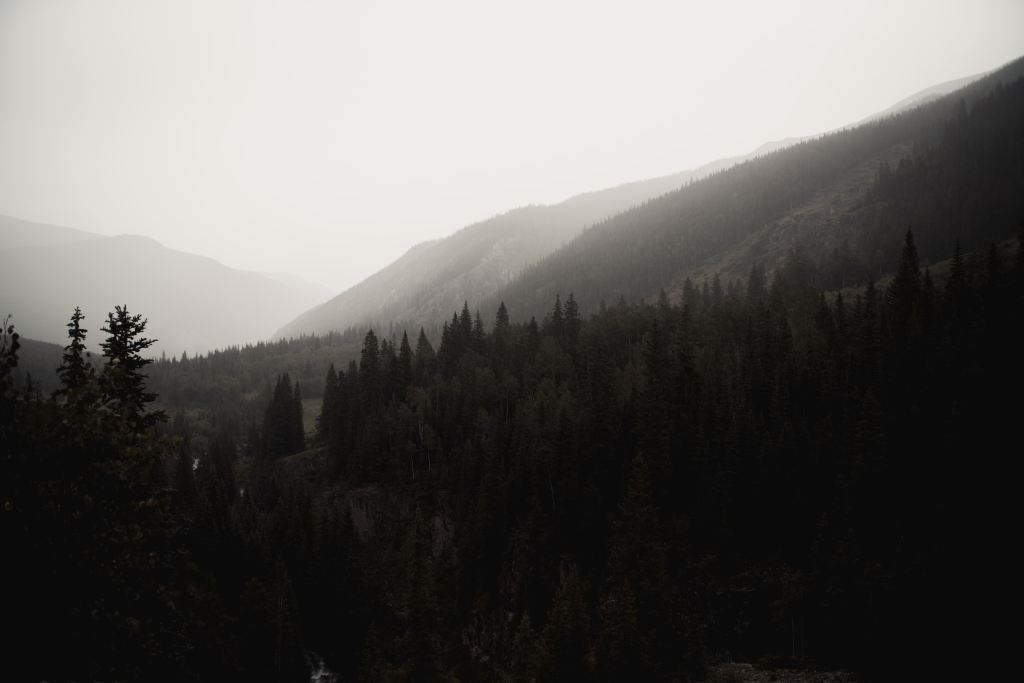
Sattie Iyre spent all of her time with a rock in the mountainous meadows. She was born near the giant monolith, a tombstone-like protrusion awkwardly situated in a dandelion-ghost field. Her mother, a wild lady, spewed her violently from the womb, and when Baby Sattie hit her head against the rock, the harsh moment knocked comfort and habit into her all at once.
As a girl, she played by the rock, decorated it with colorful flower and mushroom stickers, and shouted over it to her friends who romped and laughed on the other side, out of view. Her side was a private and sacred grassy refuge, and after a few initial glimpses, imagining what her friends looked like was just as good as the real thing. When Sattie became a young woman, her friends’ laughter gave way to the caterwauling of police sirens in the far-flung city.
She tried to imagine what her friends looked like now, but all that came to her were the smeared faces of children she once knew. This solitude led her to reading, which led her to writing, which led her to a love affair with the whole ordeal. The rock transformed into her notepad, a stone tablet to tattoo her language on, a rough-hewn memoir. It became her groom. It didn’t lie like Paul nor judge like Justin.
However, it did grow skeletal with each cursory thought and every pummel, thwack and clobber. With time, it became deliriously decorated with incomplete sentences and labyrinth-like scribbles that required one to cartwheel in slow motion to read them properly. Where one sentence ended, the next climbed upward, crossing others until conspiracy theorists might say she was carving stars of Baphomet.
She promised herself and everyone she once knew that one day she’d push the hefty stone into the city square where townspeople and children could read her work and marvel at her opinions, then go about their days tossing crackers at ducks. She sat with the rock, ate with it, talked to it, hid her belongings beneath it, kissed it softly, asked it questions, went to sleep by it, and woke up beside it.
Bats, birds, grasshoppers, wild dogs, admirers few and far between whistled and barked as they passed, but the rock was her nucleus. She knew her whittling would pay off and she often daydreamed about her wrists bending, propelling her stone libretto to town where it could become a city statue. Her parents worried, and they tried to disrupt her rock routine by asking her to attend a summer fair, filled with petting zoo animals and music and dancing and treats and magicians. She agreed.
The day of the fair, she hired movers, and the rock joined her on the trip, wheeling by in a pick-up truck as she ogled a juggler and nodded at a rabbit in the petting zoo area. She began chiseling her observations about the rabbit into the rock, shushing her parents whenever they tried to speak. Her parents sulked, rattling the pebbles in their pockets, and never bothered her about the fair again.
Sattie died by her rock, which was slender as a withered cactus by then. She was found with a chiseling tool in her hand. The coroners discovered pounds of pebbles inside her intestines, rock silt in her bloodstream, and a crooked spine from years of carving.
Her freshest chiseling read: I have nothing to say.

